The first time I heard about Monticello was in Philadelphia, during an exhibit about the life of Thomas Jefferson. That time, in addition to displaying important facts, they showed a beautiful model of the place, and when I found out it was located in Virginia, I told myself that if I was ever nearby, I wouldn't miss the opportunity to visit and take my children. This summer, that opportunity finally arose, and here I'm sharing what we learned about Thomas Jefferson and Monticello, the history and beauty of the place.
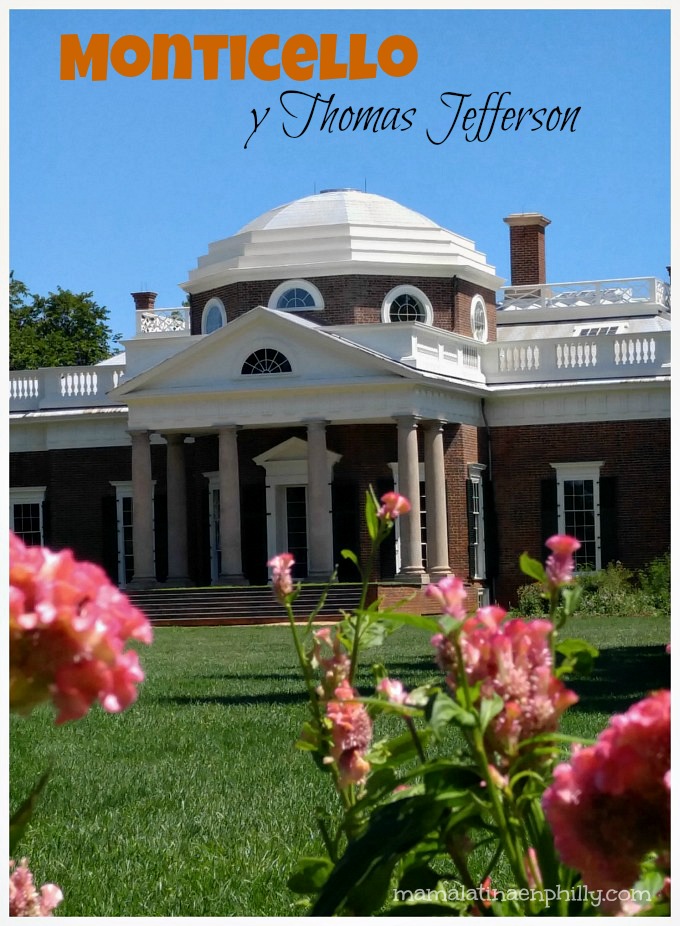
Thomas Jefferson and Monticello
Monticello is the name Thomas Jefferson gave to his estate in Virginia. It could be said to be his masterpiece, which he designed and commissioned. He made several changes during its construction, and it took him almost 40 years to complete it. Construction of the house began in 1769 and was completed in 1809. Likewise, the gardens and plantings were all meticulously designed by him. The house is now open to the public and has a total of 43 rooms, including those in the basement.
Upon arriving at Monticello, you enter the David M. Rubenstein Visitor Center, where you can purchase or pick up tickets, find the restaurants, and watch the informational film if you wish.
With your ticket in hand, you can board the buses that will take you to the hill where the house and plantations are located. There are several tour options. We had the all-day pass, which includes a visit to the house, the gardens, and the opportunity to learn about the history of the slaves who lived there.

Thomas Jefferson's House
We learn a lot from books. My children knew more about Thomas Jefferson's life than I did, and as I always say, I learn from them. However, visiting T. Jefferson's home brought us closer to him. Seeing his collections, his personal belongings, the things he liked to make, and the objects he invented made us know and admire him even more than before.
Something we really liked was the clock high on the wall connected to some weights, which were cannonballs, and which descended day by day as the days of the week marked in lines advanced. However, since there wasn't enough space at the top of the wall for the last two days, Jefferson ordered a hole to be made in the floor leading to the basement to allow the cannonballs to complete the seven days of the week.
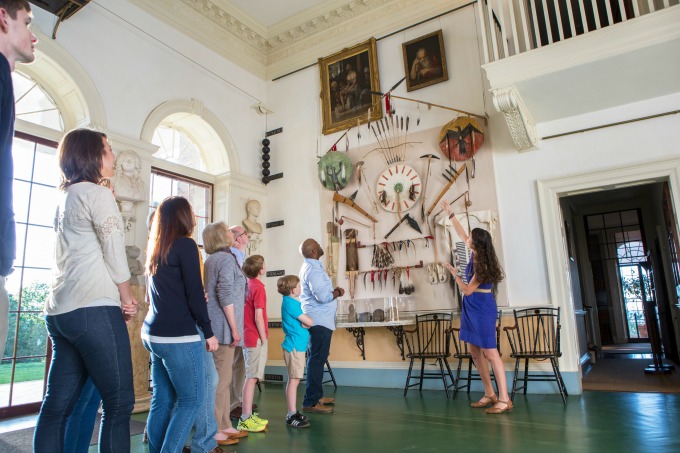
We also visited his library, which contained countless books that he shared with his family. Thomas Jefferson had six children, but only two survived to adulthood. His wife, Martha, also died after ten years of marriage.
In his bedroom, he had a reading device, a small book rotator on which he placed several open books so he could read them side by side. If he grew tired of one, he could move on to the second, third, or fourth. Jefferson was multilingual and could read and write in several languages.
Below the house is the basement where the liquors were stored, and outside was the kitchen. From the basement, the wine was transported via a small elevator to the dining room. Similarly, food was placed on a shelf outside the door, which then rotated inward, allowing those serving dinner to transport it to the dining room. The mechanism used inside the house is truly impressive.
The Gardens and Orchards at Monticello
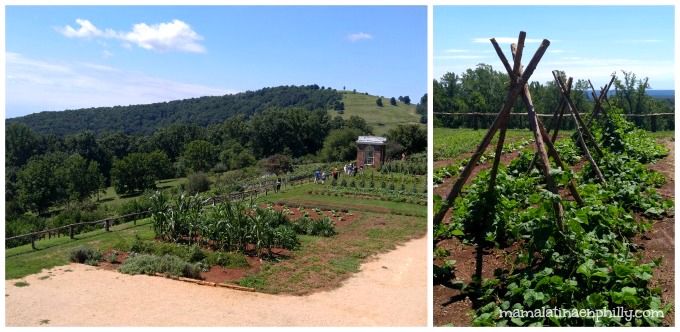
The gardens are home to a variety of flowers from different parts of the world, and we were even shown some from South America, all strategically placed to enhance the beauty of the place.

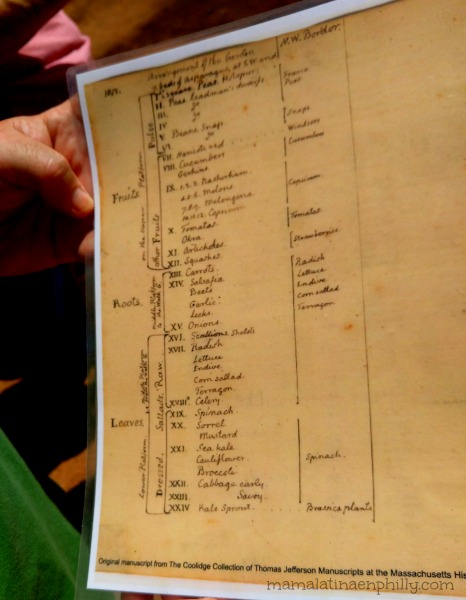
Thomas Jefferson turned his gardens into a laboratory for experiments. Every plant in his garden and orchard was kept in a register, which he called his "gardening book." In this book, he kept an organized list of all the seeds and plants he obtained, as well as the flowers. Based on his list, he could determine, for example, whether certain vegetables or fruits could be grown at Monticello, how long they took to bear fruit, or what each variety required to grow and be cultivated there. The meticulously collected data is impressive.
Slavery at Monticello
The slavery tour at Monticello took us on a brief walk through the gardens, where the guide told us a little about the life stories of the nearly 150 slaves who lived and worked there. These slaves worked on the plantations, some helped build the house, and others also performed domestic labor.


Thomas Jefferson was a staunch opponent of slavery. We're told that the slaves who lived at Monticello were treated as free people. Jefferson tried to keep families together and even encouraged them to grow their own crops at Monticello, whose produce they would then sell to Jefferson.
If you'd like to learn more about Monticello, you can visit their website, Montiello.org.